
What Does It Cost to Convert a Wood Fireplace to Gas?
Converting a wood-burning fireplace to gas costs $1,500 to $8,000 in Cincinnati, with most homeowners spending around $3,000 for a complete conversion. The price depends on whether you choose gas logs or a gas insert, whether you need a new gas line, and the condition of your existing chimney.
Many Cincinnati homeowners are making the switch from wood to gas for good reasons: no more hauling firewood, no ash cleanup, no creosote buildup, and instant heat with the flip of a switch. A gas conversion also eliminates the need for annual chimney sweeping related to wood combustion, though annual inspections are still recommended.
Conversion Options and What They Cost
There are two primary ways to convert your wood-burning fireplace to gas. Each serves a different purpose and comes at a different price point:
| Conversion Type | Cost Range | Heat Output | Best For |
|---|---|---|---|
| Gas Log Set (Vented) | $500 – $2,000 | Low – decorative only | Homeowners who want ambiance on a budget |
| Gas Log Set (Ventless) | $300 – $1,500 | Moderate | Rooms without easy chimney access |
| Gas Fireplace Insert | $2,000 – $5,000 | High – real heating value | Homeowners who want efficient supplemental heat |
| Full Gas Fireplace Replacement | $3,500 – $8,000 | High | Complete fireplace upgrades with new surround |
Gas Logs vs Gas Insert: Which Conversion Makes More Sense?
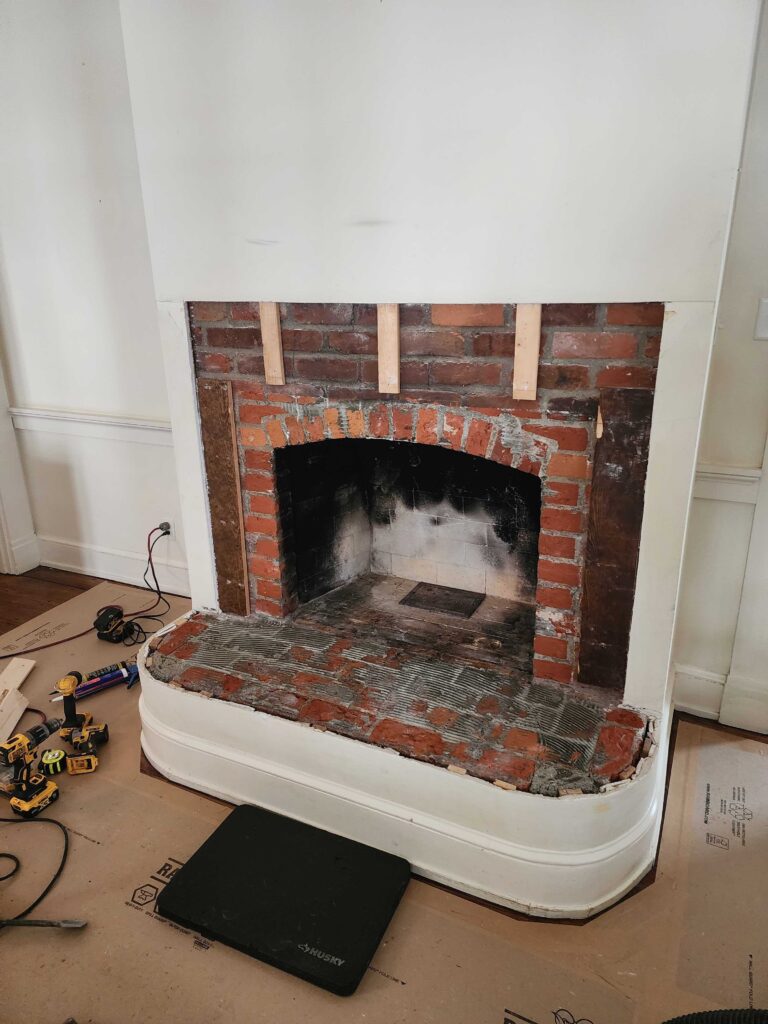
Gas logs are the simpler and less expensive option. A set of ceramic logs is placed over a gas burner inside your existing firebox. Vented gas logs require the damper to remain permanently open, which means heat escapes up the chimney — making them primarily decorative. Ventless logs produce more usable heat but introduce moisture and trace combustion products into your living space.
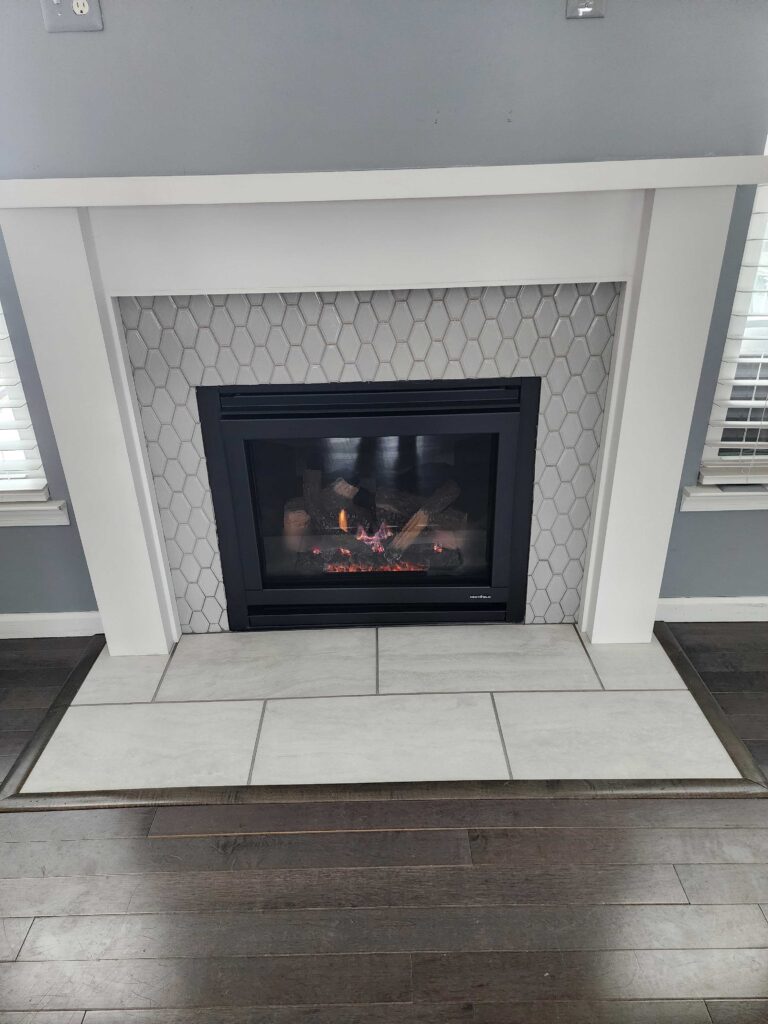
A gas insert is a sealed, self-contained unit that slides into the existing fireplace opening. It connects to the gas supply and vents through a stainless steel liner installed in the chimney. Because the firebox is sealed behind glass, a gas insert captures and radiates 70 to 85 percent of the heat it produces. For Cincinnati homeowners who want their fireplace to actually warm a room, an insert is the clear winner.
The Conversion Process Step by Step
Here is what to expect when converting your wood-burning fireplace to gas:
Step 1 — Assessment and Inspection: A certified technician inspects your existing fireplace, chimney, and the surrounding structure. This includes checking the chimney liner condition, measuring the firebox dimensions, and determining whether a gas line exists nearby. A Level 2 chimney inspection with video camera scan may be recommended if the chimney’s interior condition is unknown.
Step 2 — Gas Line Installation: If your fireplace does not already have a gas supply line, a licensed plumber installs one. This typically costs $300 to $800 depending on the distance from an existing gas line to the fireplace location. A shutoff valve is installed near the fireplace for safety.
Step 3 — Chimney Preparation: For a gas insert, the chimney needs a properly sized stainless steel liner. The old clay liner may remain in place with the new metal liner running inside it. For gas logs in an existing vented fireplace, chimney preparation is minimal — the chimney just needs to be clean and the damper functional.
Step 4 — Unit Installation: The gas logs or insert are positioned in the firebox and connected to the gas supply. For inserts, the liner is connected at the top of the unit and run up through the chimney. All gas connections are tested for leaks.
Step 5 — Permits and Inspection: Most Cincinnati-area municipalities require a permit for gas fireplace work. After installation, a building inspector verifies that the work meets local codes. Permit fees typically run $150 to $400.
Step 6 — Testing and Walkthrough: The technician tests the completed installation for proper operation, explains the controls, and reviews maintenance requirements with you.
Additional Costs to Plan For
Beyond the core conversion cost, some projects require additional work:
Chimney Relining: If your chimney needs a new liner for the gas insert, add $900 to $3,800 depending on chimney height and material. Most gas insert installations require a liner.
Chimney Repairs: If the inspection reveals damaged mortar, cracked bricks, or a deteriorated chimney crown, those repairs should be completed before or during the conversion. Costs vary based on the scope of work.
Electrical Work: Some gas inserts with electronic ignition, remote controls, or blower fans need an electrical outlet near the fireplace. Adding an outlet typically costs $150 to $300.
Cosmetic Updates: Many homeowners use the conversion as an opportunity to update the fireplace surround, mantel, or hearth. This is optional but can significantly change the look of the room.
Is Converting Worth It?
For most Cincinnati homeowners, the answer is yes. A gas conversion eliminates the ongoing costs and effort of wood burning — no more buying firewood ($250 to $400 per cord), no more chimney sweeping for creosote, and no more concerns about sparks, embers, or house fires from unattended fires.
Gas fireplaces also add value to your home. According to the National Association of Realtors, a fireplace can increase home value by 1 to 5 percent, and gas fireplaces are more attractive to buyers than wood-burning ones because of their convenience and lower maintenance.
THINKING ABOUT CONVERTING TO GAS?
Choice Chimney Solutions handles every step of the wood-to-gas conversion process—from chimney inspection to final installation. Serving Cincinnati and surrounding areas.
Schedule Your Fireplace Conversion Consultation
Choice Chimney Solutions handles wood-to-gas fireplace conversions across Greater Cincinnati. Our CSIA-certified technicians will assess your existing setup, explain your options, and provide a clear, upfront quote.
Call: (513) 900-0891
Email: sales@choicechimneysolutions.com
We serve Cincinnati, Loveland, Milford, West Chester, Indian Hill, Mason, Blue Ash, Montgomery, Wyoming, Mariemont, Anderson Township, and Hyde Park.
FREQUENTLY ASKED QUESTIONS
CAN ANY WOOD-BURNING FIREPLACE BE CONVERTED TO GAS?
Most wood-burning fireplaces can be converted, but the chimney must pass a Level 2 inspection first. The flue needs to be properly sized and structurally sound. Damaged chimneys may need repairs before conversion is possible.
HOW MUCH DOES IT COST TO CONVERT FROM WOOD TO GAS IN CINCINNATI?
A complete wood-to-gas conversion typically costs $3,000 to $7,500 in Cincinnati, depending on whether you need a new gas line, chimney relining, and the type of gas insert you choose.
WILL I STILL NEED CHIMNEY MAINTENANCE AFTER CONVERTING TO GAS?
Yes, but significantly less. Gas fireplaces still require annual inspections to check the venting system, gas connections, and burner components. However, there’s no creosote buildup, so you won’t need regular chimney sweeping.
DO I NEED A PERMIT TO CONVERT MY FIREPLACE TO GAS?
Yes. Most Cincinnati municipalities require a permit for gas line work and appliance installation. A licensed installer handles the permit process as part of the project.