
Your chimney is one of the most exposed parts of your home. It sits on your roof, takes direct hits from rain, snow, ice, wind, and UV exposure year-round, and handles extreme temperatures every time you use your fireplace. That kind of wear adds up.
The good news is that chimney problems almost always show warning signs before they become serious. The trick is knowing what to look for and acting before a small issue turns into a major repair.
Here are eight red flags that tell you your chimney needs professional attention.
1. Crumbling or Deteriorating Mortar Joints
The mortar between your chimney’s bricks is the first line of defense against weather. Over time, freeze-thaw cycles, rain, and general aging cause mortar to crack, crumble, and fall away.
You can spot this from the ground in many cases. Look at the mortar lines between the bricks on your chimney. If you see gaps where mortar has fallen out, crumbling along the joints, or mortar that looks sandy and loose, the joints are deteriorating.
Why it matters: mortar joints hold the entire chimney structure together. When they fail, moisture gets into the brickwork. That moisture freezes in winter, expands, and accelerates the damage. What starts as a surface issue can eventually compromise the chimney’s structural integrity.
Catching mortar deterioration early means a more manageable repair. Waiting until bricks start shifting or falling makes the job significantly larger and more expensive.
2. White Staining on the Bricks (Efflorescence)
If you notice white, chalky deposits on the exterior of your chimney bricks, that is efflorescence. It happens when moisture moves through the masonry, dissolves mineral salts in the brick or mortar, and deposits those salts on the surface as the water evaporates.
Efflorescence itself is not destructive. But it is a clear indicator that moisture is moving through your chimney’s masonry, and that moisture is the real problem. Excessive moisture inside brickwork leads to deterioration, especially during freeze-thaw cycles.
If the white staining is light and limited to a small area, it may not be urgent. But widespread or recurring efflorescence means moisture is consistently penetrating the chimney, and the underlying cause needs to be identified and addressed.
3. A Leaning or Tilting Chimney
This one is hard to miss, but homeowners sometimes overlook a gradual lean because they see their chimney every day. Step back and look at your chimney from a distance. Compare its angle to the roofline and the vertical lines of your house.
A chimney that is visibly leaning, even slightly, has a structural problem. This can result from foundation settling, deteriorated mortar allowing the structure to shift, or long-term moisture damage weakening the base.
A leaning chimney is not a cosmetic issue. It is a safety concern. The weight of a masonry chimney is substantial, and a structure that has begun to lean will continue to move unless the underlying problem is corrected. This is one situation where you should call a professional promptly rather than waiting to see if it gets worse. It will.
4. Damaged or Deteriorating Flashing
Flashing is the metal (usually aluminum or galvanized steel) that seals the joint where your chimney meets the roof. Its job is to keep water from running down the chimney and into your home at the roofline.
You may not be able to inspect flashing closely from the ground, but you can often see signs of failure from inside your home. Water stains on the ceiling or walls near the chimney are a strong indicator that flashing has failed or pulled away.
From outside, look for flashing that appears bent, rusted, pulled away from the chimney, or sealed with large amounts of caulk or roofing cement. Patchwork repairs with caulk are a temporary fix at best and usually mean the flashing needs proper attention.
Flashing failure is one of the most common causes of chimney-related water damage inside homes. Addressing it early prevents damage to your ceiling, walls, insulation, and framing.
5. Rusted Damper or Firebox Components
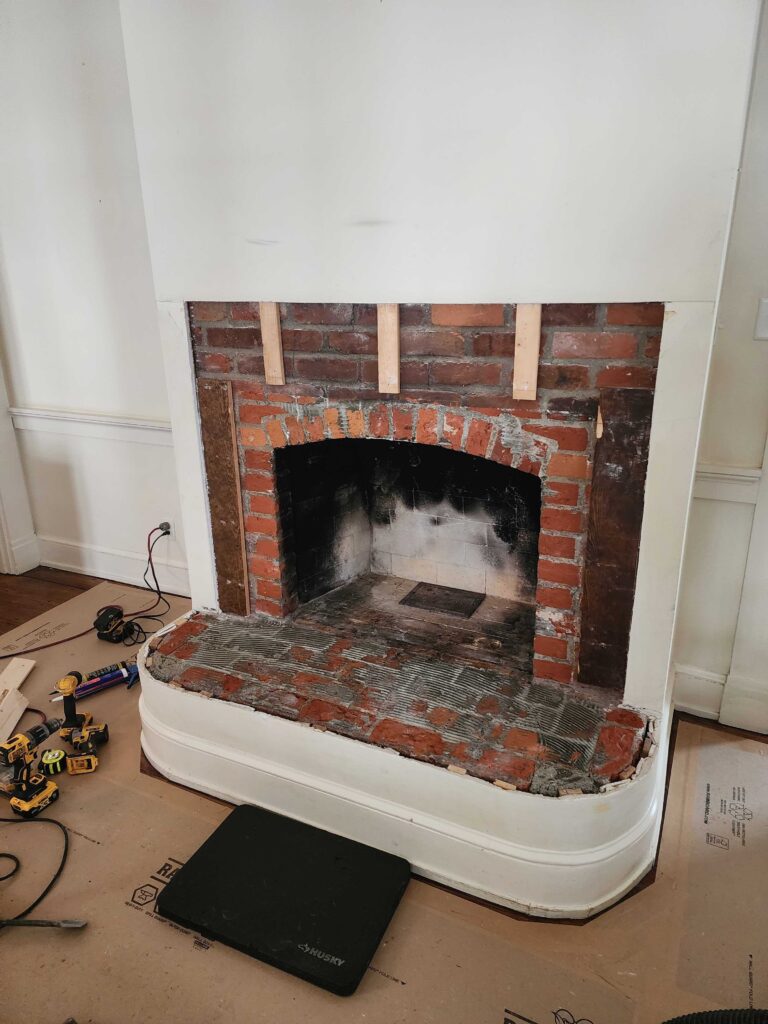
Open your damper and take a close look. If the damper is difficult to operate, makes scraping or grinding sounds, or shows visible rust, moisture has been getting into your firebox.
Rust inside the firebox is a secondary indicator, not just a problem in itself. It tells you that water is entering the chimney system and making contact with metal components. A rusted damper may not seal properly, which means you lose heated air up the chimney when the fireplace is not in use and you have no barrier against cold drafts coming in.
Check the firebox itself for signs of rust on any metal components, including the damper frame, firebox liner edges, and any metal supports. If you see rust, schedule a professional inspection to find the moisture source.
6. Spalling Bricks
Spalling is when the face of a brick flakes, chips, or pops off entirely. You might notice pieces of brick on the ground near your chimney, or see bricks on the chimney that look pitted, rough, or like layers are peeling away.
This happens when moisture gets absorbed into the brick and then freezes. The expansion cracks the brick’s surface and eventually breaks it apart. Cincinnati’s winter weather, with its repeated freeze-thaw cycles, is particularly hard on brickwork that has absorbed moisture.
Spalling bricks are more than an eyesore. Each damaged brick is weaker than it was originally and allows even more moisture penetration. The process accelerates over time. A few spalling bricks caught early can be addressed before the damage spreads to surrounding bricks and mortar.
7. Damaged Chimney Crown or Deterioration at the Top
The crown is the concrete or mortar surface at the very top of your chimney. It slopes away from the flue to direct water off the chimney rather than into it.
Cracks, chips, or missing sections in the crown let water pour directly into the chimney structure. Over time, this accelerates every other type of damage on this list.
You might not be able to see the crown clearly from the ground, which is one reason annual professional inspections matter. A technician can evaluate the crown’s condition and identify problems that are invisible from ground level.
If you can see visible damage to the top of your chimney from the ground, either chunks missing or noticeable cracking, the damage is likely significant and worth addressing soon.
8. Strong Odors Coming from the Fireplace
A persistent bad smell from your fireplace, especially during humid summer months, is a sign that something is off. The most common cause is creosote buildup that becomes pungent when moisture and warm air interact with it.
Other potential sources include animal nests or remains inside the chimney, mold or mildew growth from chronic moisture intrusion, and decomposing debris that has fallen or been blown in.
A professional chimney sweep and inspection will identify the source. If the odor is coming from creosote, a sweep will resolve it. If it is caused by moisture or animal activity, the technician can determine the right course of action.
Why Early Action Saves Money
Every item on this list follows the same pattern. Small problems are easier and less expensive to fix than big ones. A few crumbling mortar joints caught during an annual inspection are a routine repair. Those same joints ignored for three years can lead to shifting bricks, water damage inside your home, and a repair that costs several times more.
The homeowners who save the most money on chimney repairs are the ones who catch problems early through regular inspections and visual checks. An annual inspection from a qualified professional is the most cost-effective maintenance investment you can make for your chimney.
NOTICED ANY OF THESE WARNING SIGNS?
Choice Chimney Solutions provides professional chimney repair and diagnostic services throughout Greater Cincinnati. Catching problems early saves thousands in structural damage.
When to Call a Professional
If you have noticed any of the signs listed above, do not wait for your next scheduled inspection. Contact a chimney professional to evaluate the situation.
Some signs, like a leaning chimney or active water intrusion, need prompt attention. Others, like minor efflorescence or early mortar wear, may not be emergencies but should be addressed before the next heating season.
At Choice Chimney Solutions, we provide chimney inspections with full service reporting so you know exactly what is going on with your chimney. If repairs are needed, we handle chimney repairs and fireplace repairs for homeowners across the Cincinnati metro area, including Loveland, Mason, Milford, and surrounding communities.
Call (513) 900-0891 or visit choicechimneysolutions.com to schedule your chimney inspection and find out where your chimney stands.
FREQUENTLY ASKED QUESTIONS
How do I know if my chimney needs repair?
Common signs include crumbling mortar joints, white staining (efflorescence) on bricks, spalling or flaking bricks, a leaning chimney, rust on damper or firebox components, and strong odors from the fireplace when it is not in use.
How much does chimney repair cost in Cincinnati?
Chimney repair costs in Cincinnati range from $200 for minor mortar repointing to $3,000 or more for crown replacement or major structural work. A professional assessment will give you an accurate scope and estimate.
Can I delay chimney repairs?
Delaying chimney repairs usually costs more in the long run. Water infiltration through cracked mortar or a damaged crown can cause rapid deterioration during freeze-thaw cycles, turning a $500 repair into a $5,000 rebuild.