
The Short Answer: At Least Once a Year
The National Fire Protection Association (NFPA) Standard 211 states that chimneys, fireplaces, and vents should be inspected at least once a year for soundness, freedom from deposits, and correct clearances. The Chimney Safety Institute of America (CSIA) follows these same guidelines and recommends annual cleaning regardless of how often you use your fireplace.
But frequency is not one-size-fits-all. How often your chimney actually needs cleaning depends on what you burn, how often you burn it, and the type of fireplace you have. Cincinnati homeowners who burn wood daily during Ohio winters may need their chimney cleaned two or three times per season, while those with gas fireplaces may only need service every one to two years.
Cleaning Frequency by Fireplace Type
Different fuel types create different maintenance demands:
| Fireplace Type | Recommended Cleaning Frequency | Why |
|---|---|---|
| Wood-burning (daily use) | 2–3 times per season | Heavy creosote and soot buildup |
| Wood-burning (occasional use) | Once per year | Moderate buildup, plus animal nesting risk |
| Gas fireplace or insert | Once per year (inspection); cleaning as needed | Minimal soot, but components need annual check |
| Gas logs (vented) | Once per year | Open damper allows debris and animal entry |
| Pellet stove | Once per year minimum | Ash and clinker buildup in venting |
The 1/8-Inch Rule: When Cleaning Cannot Wait
The CSIA recommends chimney cleaning whenever creosote buildup reaches 1/8 inch (3mm) thickness on the flue walls. At this level, there is enough fuel to sustain a chimney fire if ignited by sparks or high flue temperatures.
There is one exception that makes the timeline even more urgent: glazed creosote. If a shiny, tar-like glaze appears in the flue in any amount — even less than 1/8 inch — the CSIA recommends immediate cleaning. Glazed creosote is the most flammable form and is extremely difficult to remove once it hardens. It often requires specialized chemical treatments or mechanical removal tools.
You cannot see creosote buildup from the firebox with a flashlight. A professional inspection using a video camera is the only reliable way to assess the condition of your flue liner and the thickness of deposits.
Why Annual Cleaning Matters Even If You Rarely Use Your Fireplace
Even if you only light a few fires per year, annual chimney service is still important for several reasons:
Animal Nesting: Birds, squirrels, and raccoons frequently build nests in unused chimneys, especially during spring and summer. A nest can block the flue completely, creating a serious carbon monoxide risk the next time you light a fire.
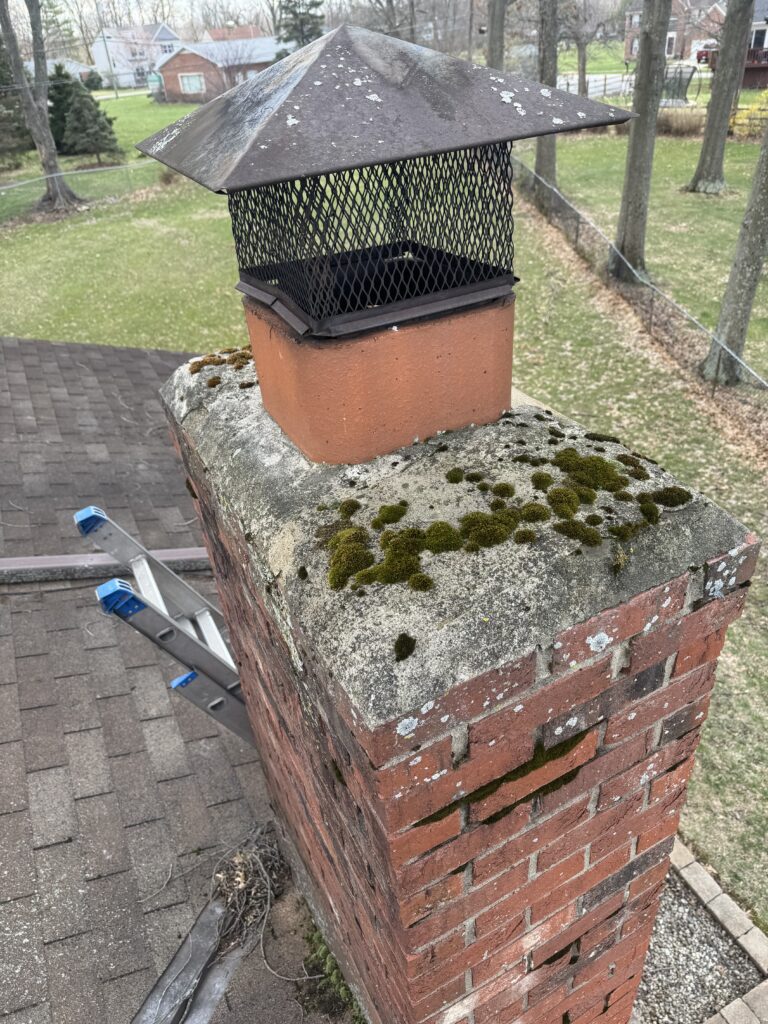
Moisture Damage: Cincinnati’s freeze-thaw cycles are hard on chimneys. Water entering through a damaged cap, cracked crown, or deteriorated liner can cause hidden damage that worsens each season. Annual inspections catch these issues early.
Leaf and Debris Accumulation: Chimneys without proper caps collect leaves, twigs, and other debris that restrict airflow and can become a fire hazard.
Chimney Liner Deterioration: Clay tile liners can crack and deteriorate over time, even without regular use. A chimney that looked fine three years ago may have developed gaps or cracks that allow heat and gases to reach combustible materials in the walls.
Signs Your Chimney Needs Cleaning Now
Do not wait for your annual appointment if you notice any of these warning signs:
Smoke coming into the room: A properly functioning chimney draws smoke up and out. If smoke is backing up into your living space, the flue may be partially blocked by creosote, a nest, or debris.
Strong odor from the fireplace: A persistent smoky or musty smell, especially in warm weather, usually indicates creosote deposits or moisture problems in the flue.
Black damper: If the damper or the visible interior of the firebox has a thick, dark coating, creosote buildup is likely significant throughout the flue.
Slow-starting or poorly burning fires: Restricted airflow from a dirty chimney makes fires difficult to start and maintain. If your fires seem sluggish compared to earlier in the season, cleaning is likely overdue.
Visible creosote flakes in the firebox: If dark, flaky material is falling into the firebox from above, the creosote coating is beginning to break loose — a sign of significant buildup.
What Does Professional Chimney Cleaning Include?
A professional chimney cleaning from a CSIA-certified company typically includes:
Visual Inspection: The technician checks the exterior and accessible interior components — cap, crown, flashing, damper, smoke shelf, and firebox — for damage or deterioration.
Mechanical Sweeping: Using specialized brushes sized to your flue, the technician scrubs the full length of the liner to remove creosote, soot, and debris. The work is done from either the top down or bottom up, depending on the chimney configuration.
Debris Removal: All loosened material is contained and removed. Professional companies use drop cloths, HEPA-filtered vacuums, and sealed bags to keep your home clean during the process.
Written Report: You receive documentation of the chimney’s condition, any issues found, and recommendations for repair or follow-up.
How Much Does Chimney Cleaning Cost in Cincinnati?
Standard chimney cleaning in the Cincinnati area runs $150 to $300 for a single flue. Factors that can increase the cost include heavy creosote buildup requiring extra time, multi-story homes with difficult roof access, and chimneys with multiple flues. A combined inspection and cleaning is typically the best value.
DUE FOR A CHIMNEY CLEANING?
Choice Chimney Solutions provides professional chimney sweep and cleaning services throughout Cincinnati. We’ll remove creosote buildup, check for damage, and make sure your chimney is safe for the season.
Schedule a Cleaning or call (513) 900-0891
Schedule Your Annual Chimney Cleaning
Choice Chimney Solutions provides professional chimney cleaning and inspection services across Greater Cincinnati. Our CSIA-certified technicians use video camera inspections to show you exactly what is inside your chimney before and after cleaning.
Call: (513) 900-0891
Email: sales@choicechimneysolutions.com
We serve Cincinnati, Loveland, Milford, West Chester, Indian Hill, Mason, Blue Ash, Montgomery, Wyoming, Mariemont, Anderson Township, and Hyde Park.
FREQUENTLY ASKED QUESTIONS
HOW MUCH DOES A CHIMNEY CLEANING COST IN CINCINNATI?
A standard chimney cleaning in Cincinnati costs $150 to $300 depending on the type of fireplace, level of creosote buildup, and accessibility. A Level 1 inspection is typically included with a professional sweep.
HOW DO I KNOW IF MY CHIMNEY NEEDS CLEANING?
Signs include a strong odor coming from the fireplace, visible soot or creosote flakes in the firebox, smoke entering the room during use, or a dark, tar-like buildup on the flue walls. If it’s been more than a year since your last cleaning, schedule one before burning season.
CAN I CLEAN MY CHIMNEY MYSELF?
While DIY chimney brushes exist, professional cleaning is strongly recommended. Certified sweeps have the tools to reach the full flue length, identify hidden damage, and properly dispose of creosote—a combustible material that causes chimney fires.
WHAT HAPPENS IF YOU DON’T CLEAN YOUR CHIMNEY?
Creosote buildup is the leading cause of chimney fires. Beyond fire risk, a dirty chimney restricts airflow, causes smoke to back up into your home, and can lead to carbon monoxide exposure. The National Fire Protection Association recommends annual cleaning and inspection.